
Technology
An experimental optical architecture
This section describes the conceptual principles of the HR-DOC system. The complete mathematical foundations, design parameters and detailed engineering form part of the technical documentation reserved for scientific and institutional collaborators under confidentiality agreement.
The website communicates the vision. Technical documentation is shared with collaborators.
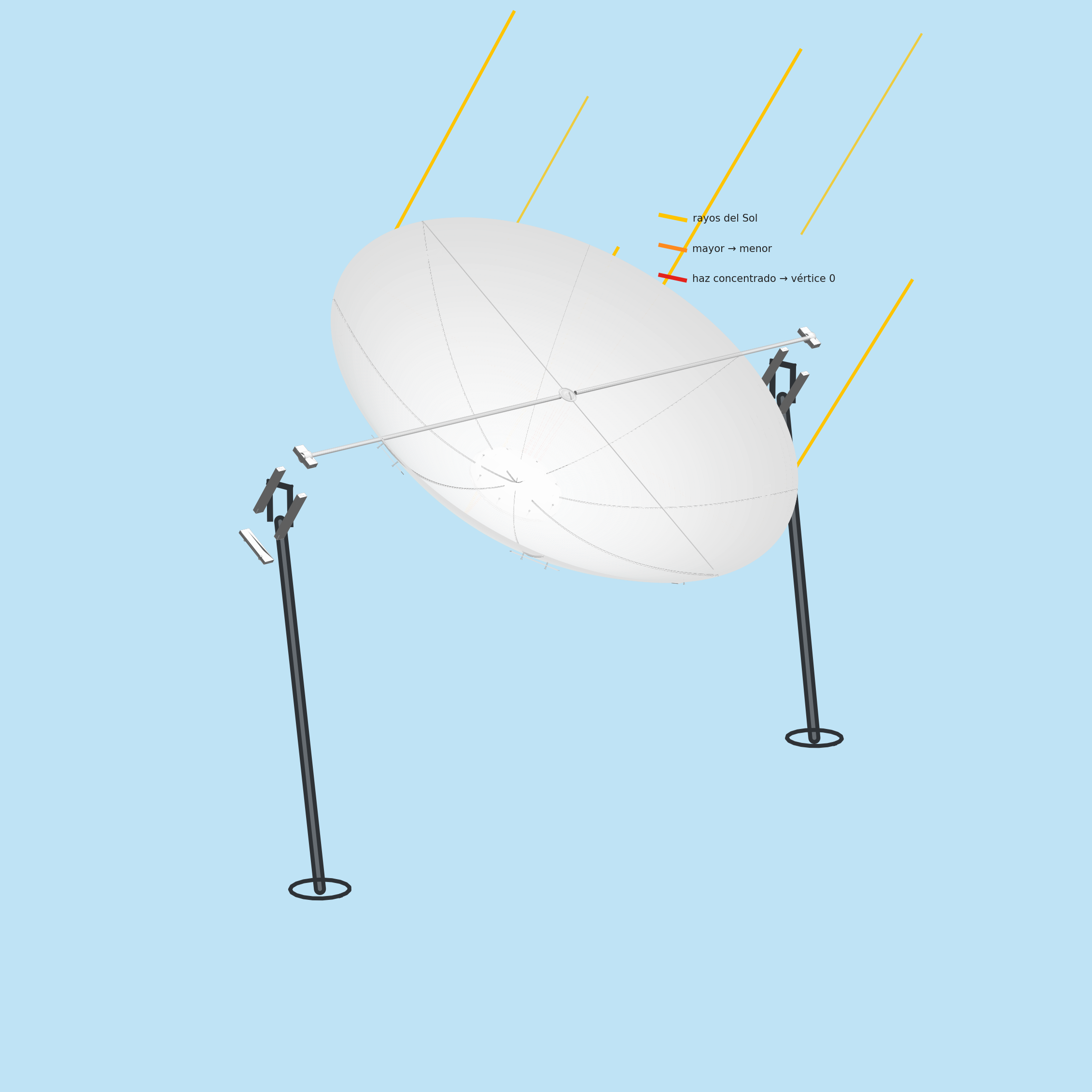
Imagen conceptual
HR-DOC
An optical architecture for managing concentrated solar energy
HR-DOC (HeliosReflect Dual Optical Concentrator) is an experimental optical architecture whose research objective is to capture parallel solar radiation and convert it into a concentrated, collimated beam directed to a single receiver point, from which energy can be distributed across different applications. It is not a finished system: it is a hypothesis under mathematical and numerical validation.
Capture
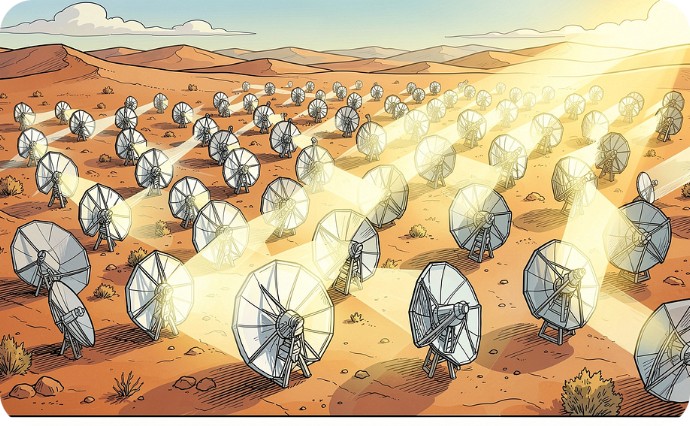
The architecture captures incident parallel solar radiation via a large-aperture primary surface.
Concentration
The radiation is concentrated to a common focus using the focal property of parabolic geometry, a classical principle of geometric optics.
Recollimation
A secondary surface recollimates the beam towards a single receiver point. This is the differential element of the HR-DOC hypothesis.
Distribution
From the receiver, energy can be distributed among electricity, heat, fibre optic light transport and photochemical processes.
Hypothesis under mathematical validation (analytical, symbolic and Monte Carlo) · Experimental validation pending. The focal property of the parabola is established science; its application in the HR-DOC architecture is what is under investigation.
See the level of evidence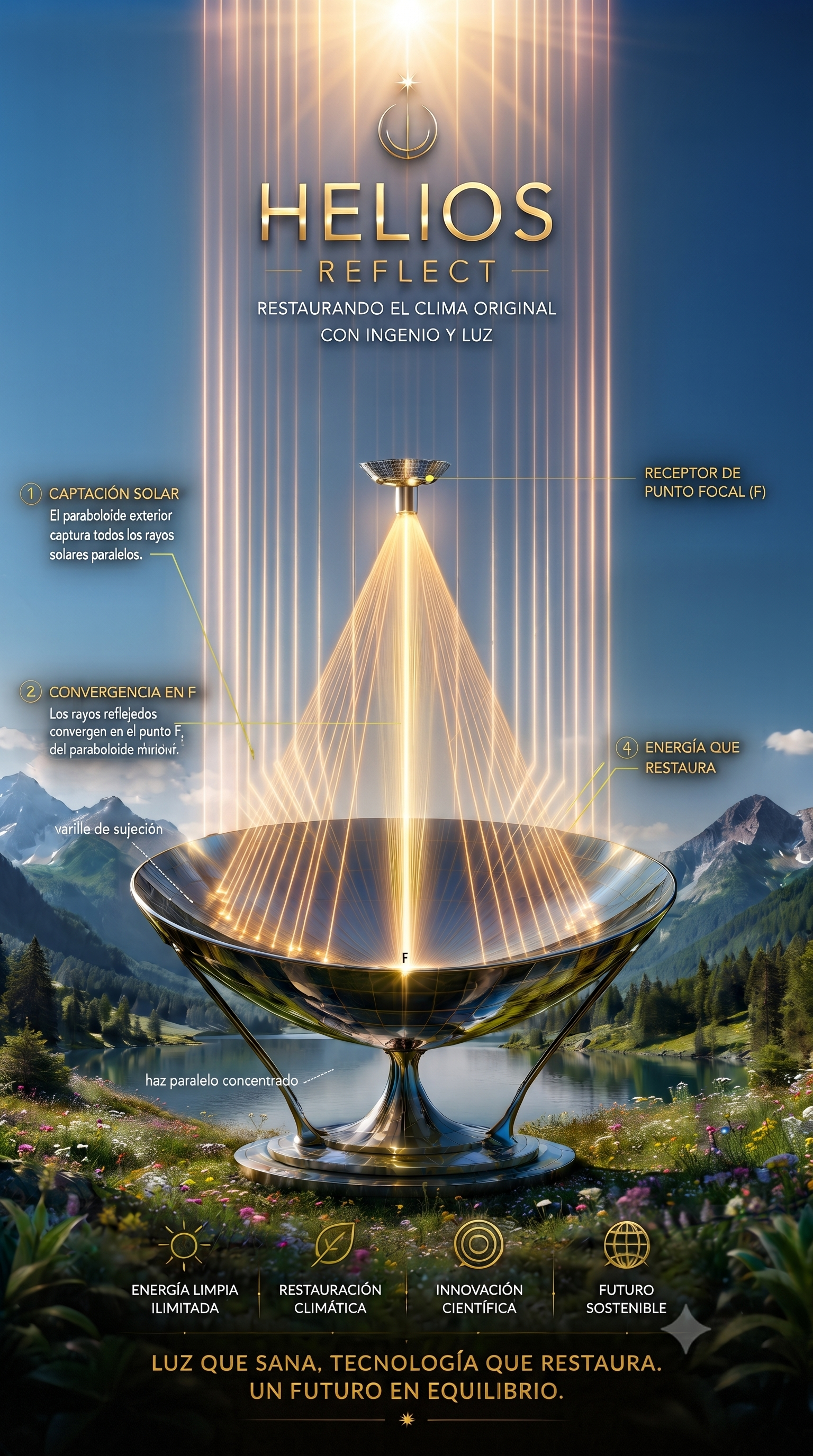
Imagen conceptual
Foundations
Established science, not new laws of physics
HeliosReflect does not require discovering new laws of physics. It relies on consolidated principles: conservation of energy, geometric optics, the focal property of the parabola, solar tracking and Stirling technology. The novelty lies in the architecture, not in fundamental physics.
Four applications
What can be done with a concentrated beam
Four application lines rest on the optical core. Each has a distinct maturity status.
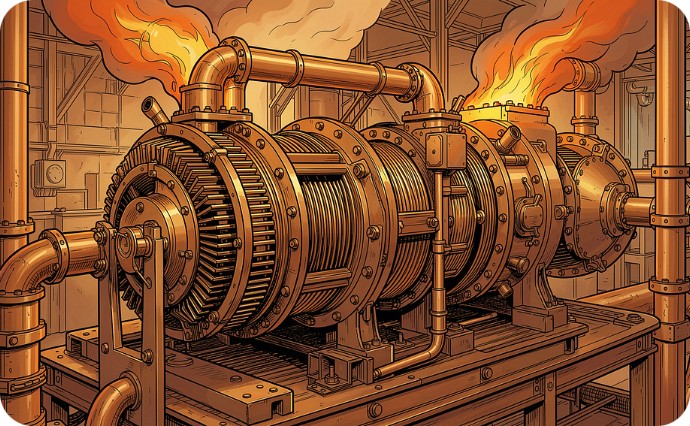
Stirling engine
Concentrated heat → electricity
Conversion of heat into electricity with 30-40% efficiencies. Mature, consolidated technology; its integration with HR-DOC is what must be validated.

Optical fibre transport
Light, not electricity
Transport photons to buildings, greenhouses and reactors using optical fibre, avoiding the double conversion light → electricity → light.

Artificial photosynthesis
Research hypothesis
Feed photochemical reactors with concentrated light to produce hydrogen, reduce CO₂ or synthesise solar fuels. HR-DOC does not perform the reaction: it only supplies the luminous flux.
Climate regulation
Steerable mirrors · hypothesis
Deliberately reflect part of the radiation to manage the local radiative balance. Its effects can only be determined through climate simulations and experimental campaigns.
Known limits
Challenges we still must overcome
Large-scale optical precision
Keeping the alignment and geometry of the paraboloids within demanding tolerances under variable environmental conditions.
Advanced materials
Reflectors that withstand high temperature and concentrated radiation without degrading, at a viable cost.
Thermal management
Using or dissipating residual heat efficiently and integrating it into the multi-functional applications.
Conceptual representations
Diagrams and visualisations
All images in this section are conceptual representations of the system, not engineering blueprints or validated simulations.
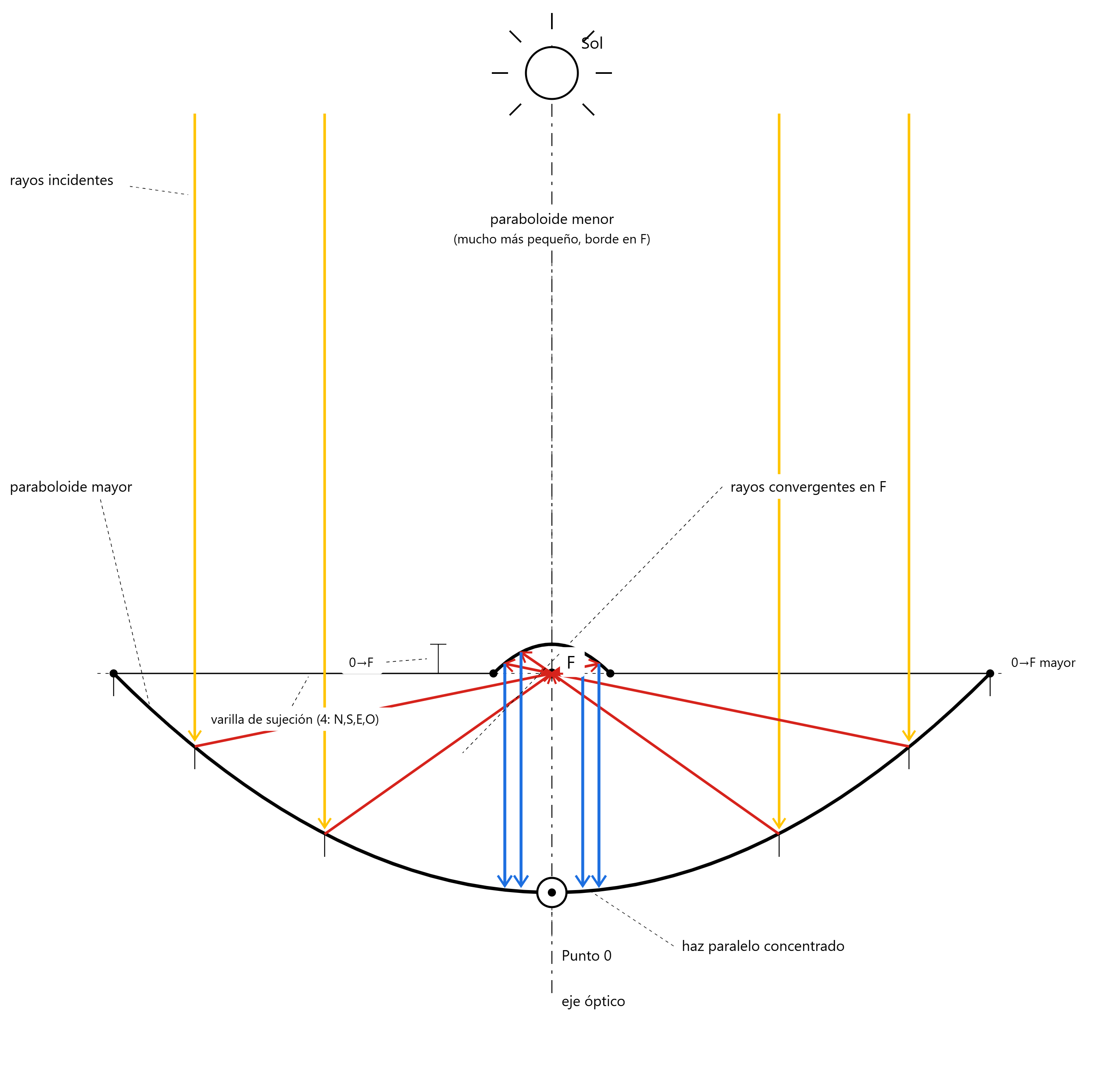
Imagen conceptual
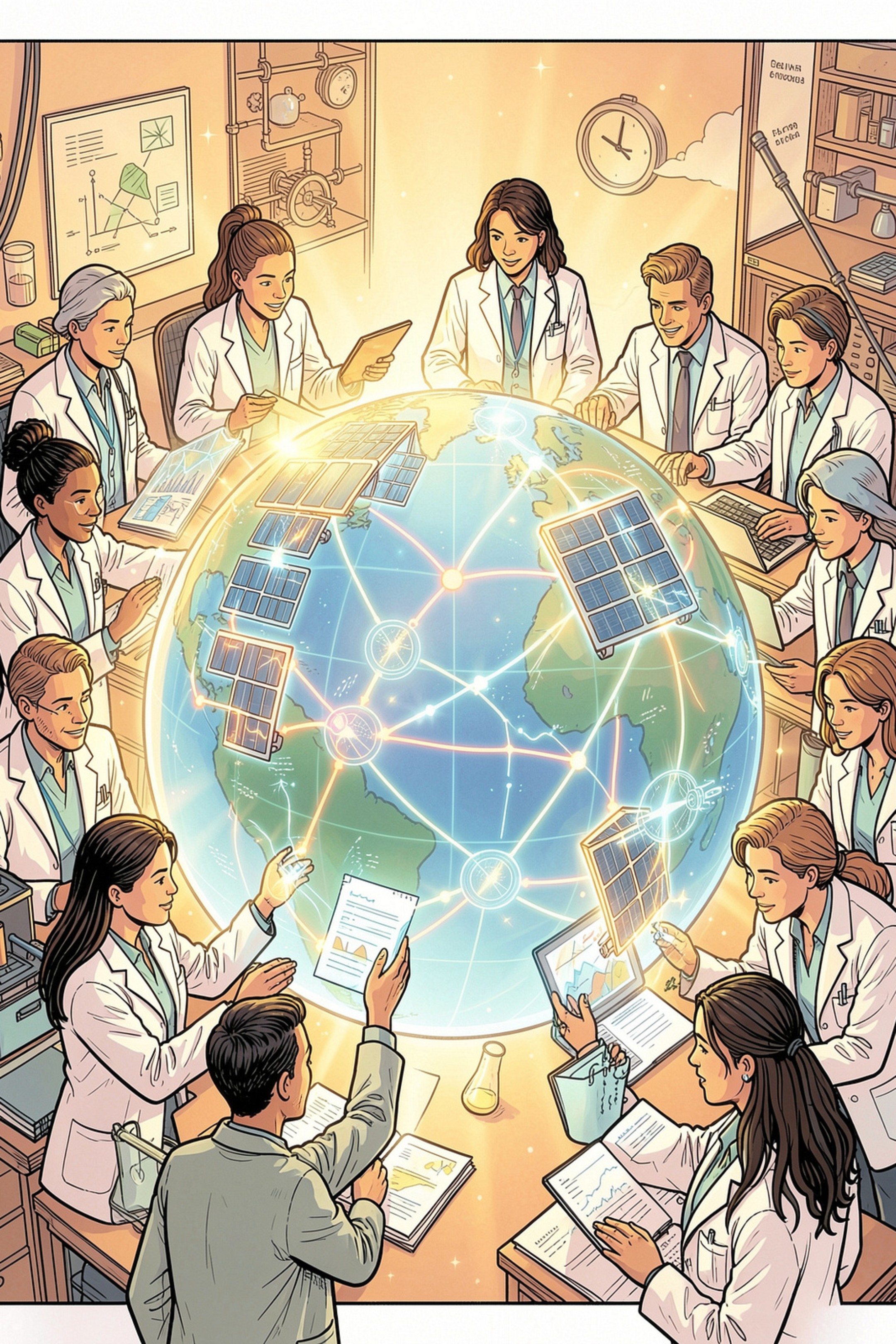
Imagen conceptual
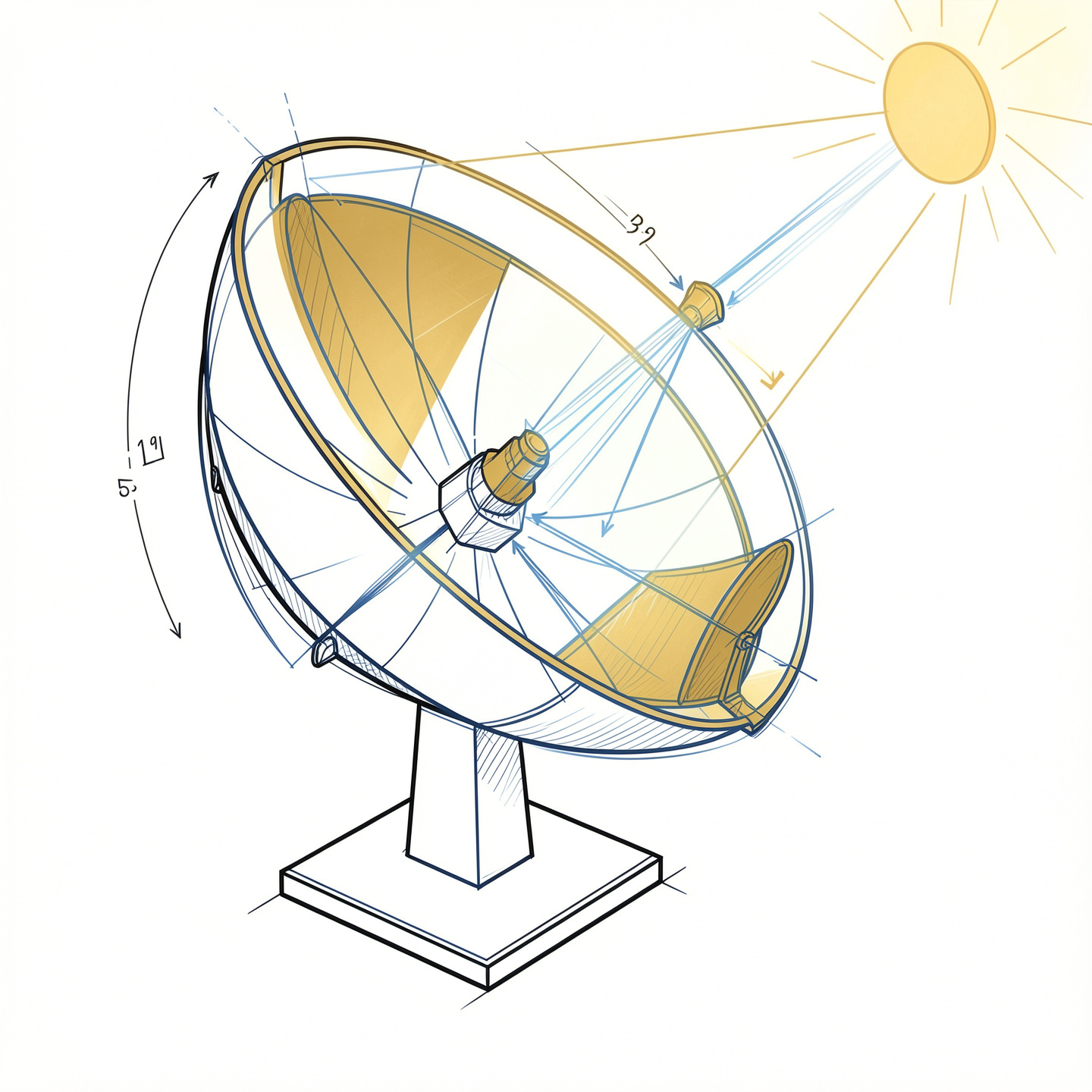
Imagen conceptual
Protection of knowledge
Complete geometries, algorithms, critical parameters and proprietary mathematical relationships are not published on this website. These contents are shared exclusively with collaborators under NDA, partner universities and funded projects.
Intellectual property policy